
U.S. Soccer Structure Explained
American soccer is often described as a “pyramid,” but it does not function like most global systems. While multiple divisions exist, they are not connected through promotion and relegation.
This guide explains how the U.S. structure actually works and why that difference matters.
Key Concept
How is The U.S. Soccer Pyramid Connected?
The United States has multiple professional and amateur soccer leagues operating at different levels. These divisions are often described as a pyramid, but they are not connected through promotion and relegation the way most global systems are.
Understanding that difference helps explain how the American soccer landscape operates today.
This is also where much of the confusion and debate around American soccer begins.
For a plain-language explanation of why American soccer looks and feels different from the rest of the world, start with why American soccer feels different from the rest of the world.
The American Soccer Landscape
American soccer is far larger and more complex than many fans realize.
Professional leagues operate across multiple divisions, while semi-professional and amateur competitions stretch across nearly every region of the country. From large metropolitan markets to smaller community clubs, thousands of players and supporters participate in organized leagues every year.
However, unlike many countries, these leagues are not connected through promotion and relegation. Instead, the United States has developed a network of independent leagues that operate at different levels of the game.
RECENT NEWS: In 2025 and 2026, this landscape began to shift. The USL adopted a promotion and relegation framework, marking the first time in U.S. professional sports history that clubs could move between divisions based on results.
What People Mean When They Say “The Pyramid”
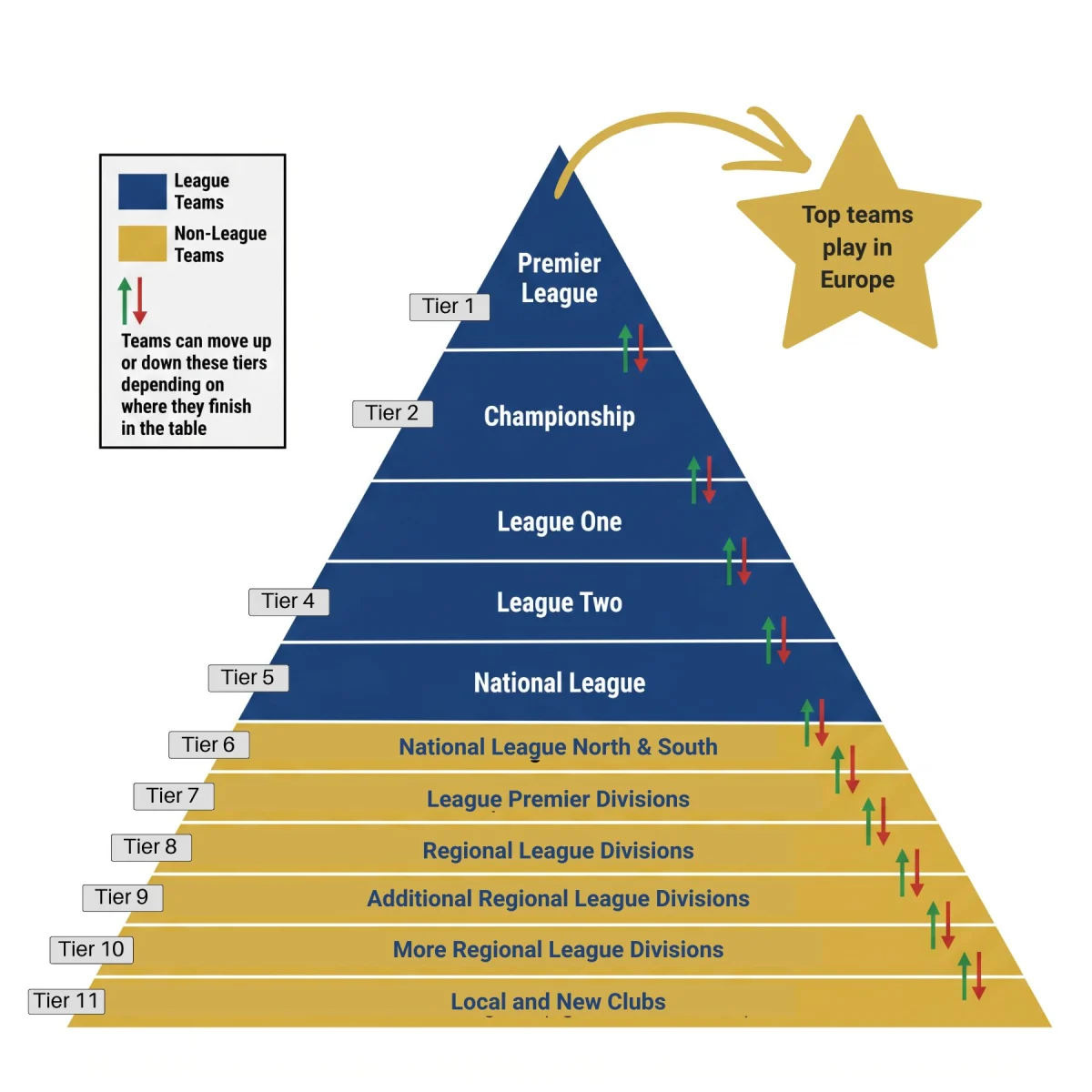
In most countries, the term “soccer pyramid” describes a connected league system. Clubs move up or down divisions based on performance. Results on the field determine position in the tiers above or below.
In the United States, the structure can look similar at first glance. Multiple divisions exist. Professional standards are published. Leagues operate at national and regional levels.
But the way those divisions connect is very different.
That structural difference shapes nearly every serious discussion about the future of American soccer.
What a True Open Pyramid Looks Like
In an open system, leagues are vertically connected. Clubs earn promotion to higher divisions or face relegation to lower divisions based strictly on competitive results.
This creates a single national ladder:
- Division 1
- Division 2
- Division 3
- Regional and local leagues
Each level feeds directly into the one above it. Success creates upward mobility. Poor performance carries consequences.
The system does not rely on expansion approval or negotiated entry. Placement is determined on the field.
That is what defines a true competitive pyramid.
How the U.S. Structure Actually Operates
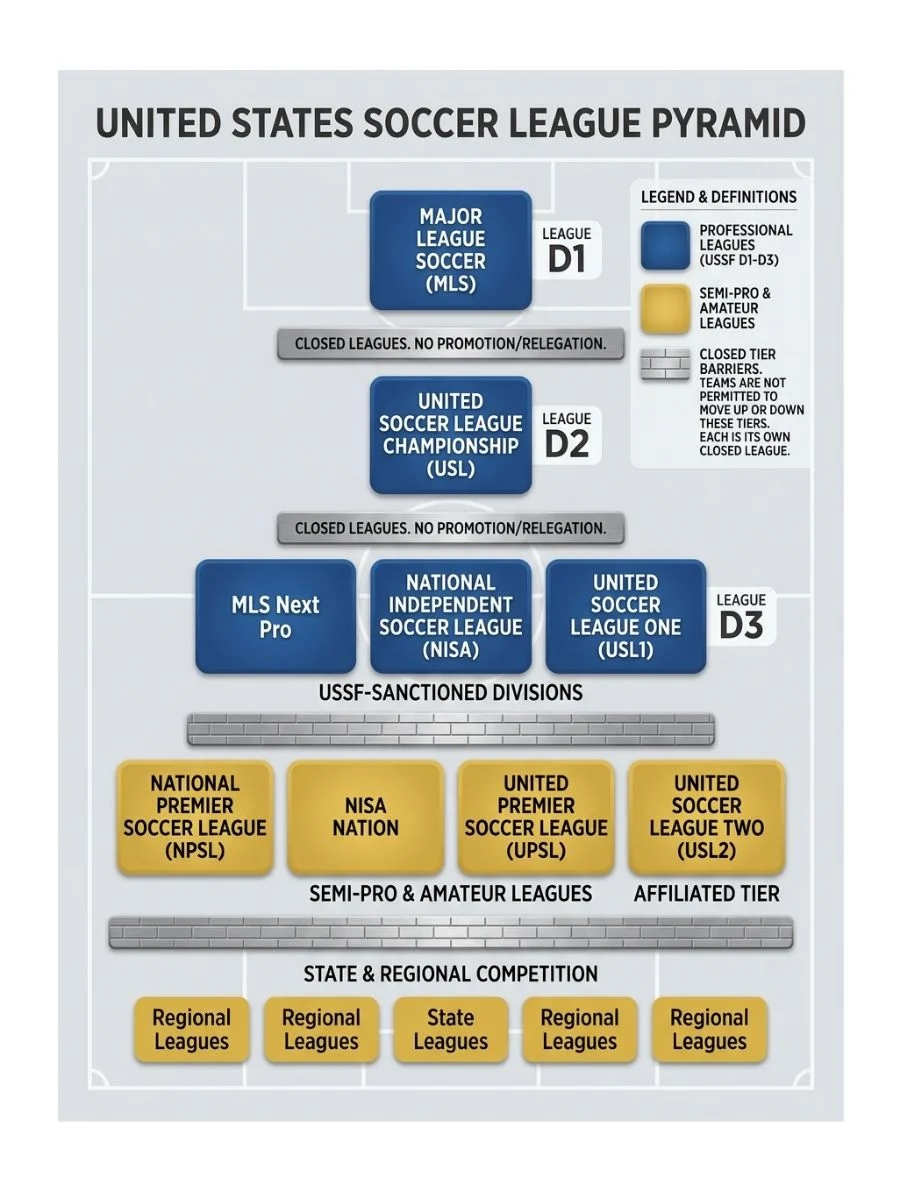
The United States has multiple competing professional divisions, but they do not operate as a connected competitive ladder.
Professional leagues are sanctioned at Division I, Division II, and Division III levels. MLS holds Division I status. USL Championship operates at Division II. MLS Next Pro and USL League One hold Division III. Semi-professional and amateur leagues operate beyond those divisions. However, clubs do not move between professional levels automatically based on performance.
In practice:
- Each professional league operates independently
- League membership is usually determined through ownership and expansion processes
- Movement between divisions occurs by decision, not by results
This is why many observers describe the U.S. system as having tiers without a true pyramid.
The layers exist. The pathway between them does not.
A club can win its league and remain in the same division the following season.
Why the U.S. Soccer Structure Is Different from Other Countries
One of the major differences between the American soccer system and most of the world is that U.S. leagues are not connected through promotion and relegation.
That difference has become a lightning rod in the American soccer world, and it is important to understand the details of what “Pro-Rel” really means.
Learn more:
What is Promotion and Relegation in the United States?
What This Means for Sporting Competition
Without promotion and relegation, clubs in the United States cannot move up the pyramid based solely on results on the field. Advancement to higher divisions usually occurs through league expansion or new franchise ownership groups.
The tiers may look familiar, but they do not function the same way.
This structure creates stability for investors, but it also limits the ability for successful lower-division clubs to reach the top tier through competition.
The debate is not about whether divisions exist. It is about opportunity and whether results should determine movement between them.
Learn more:
Challenges for Lower-League Mobility
Sanctioning and Professional Standards
In the United States, professional leagues must meet standards set by the U.S. Soccer Federation in order to receive Division I, II, or III sanctioning. These standards include requirements for ownership groups, stadium size, market population, and financial stability.
Because of these rules, leagues cannot simply move teams between divisions the way most global soccer pyramids do.
Learn more:
What are the U.S. Pro League Standards?
Explore the U.S. Structure Key Topics
At the same time, discussions about competitive mobility and long-term system design remain part of the broader soccer conversation.
Understanding the current structure provides context for those discussions.
For deeper analysis of specific topics, explore:
- Why American Soccer Feels Different From the Rest of the World (the front door for new fans)
- Promotion & Relegation in the United States
- 11 Benefits of Pro-Rel
- Arguments against Pro-Rel
- U.S. Professional League Standards
- Challenges and Structural Barriers to Division Movement
- Comparing Global League Systems
- Common Myths About Promotion & Relegation
Continue Exploring Soccer Nation USA
Understanding structure is only the first step. The American soccer landscape includes professional leagues, regional competitions, and grassroots clubs operating at many levels.
If you want to see how this structure plays out across the country, start here: