
FAN CULTURE & GEAR
Types of Soccer Scarves: What Each One Is and How to Choose
Not all scarves are the same
Most fans don’t plan their first scarf. It just shows up. A supporter group hands one over at a watch party. You grab one at a road game on a cold night. Someone is selling them outside the stadium before kickoff.
Then you buy a second one on purpose. That’s when you start paying attention to what they’re actually made of.
This page breaks down the four main styles soccer scarves, and five types of materials: what each one is good for, and who tends to reach for them. Whether it’s your club, the national team, or the European side you’ve followed for years, knowing the material means you’ll buy smarter and keep it longer.
Note that most soccer scarves run 60 to 65 inches long and about 8 inches wide. The size is fairly standard across materials and styles.
The 4 Main Scarf Styles
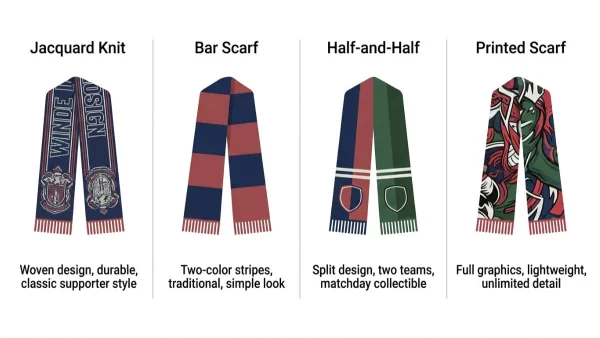
Before the material, there is the construction. Most soccer scarves fall into four main styles.
Jacquard knit is the classic. Color is woven directly into the pattern, which means the design is part of the fabric itself rather than printed on top. Most club scarves you see in supporter sections are jacquard knit. They hold up well and look sharp for years.
Bar scarves are the original. Two alternating colors running in bands across the length of the scarf. This is what fans were wearing in the early days of the tradition and the style never went away. Simple, clean, and unmistakably soccer.
Half-and-half scarves split two clubs down the middle, one on each half. Popular at big matchups, cup finals, and as collector pieces from specific games. Some hardcore supporters view them as tourist gear. Most collectors have at least one anyway.
Printed scarves use sublimation technology to put detailed graphics directly onto lightweight polyester. No color limits, no design restrictions. This is the standard for commemorative and matchday scarves where you want a specific image, photo, or scoreline on the fabric.
National Team Soccer Scarves
If you’re looking for a first scarf idea, see our guide about national team scarves which are some of the most collected in American soccer.
The 5 Main Scarf Materials
1. Acrylic Scarve
Most Common, Most Affordable
Everyday game day, most club scarves
($15 to $40)
Pros:
- Affordable
- Durable
- Holds color well
- Easy to wash
Cons:
- Not as warm as natural fibers
- Can feel synthetic against skin
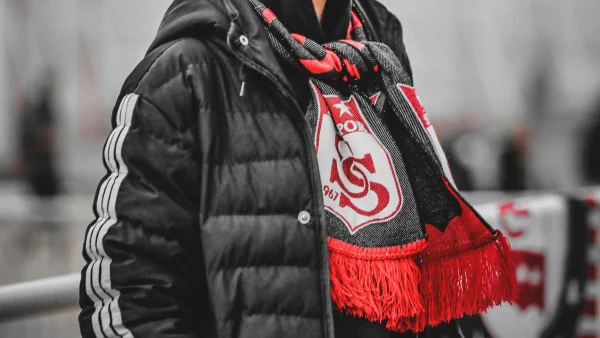
This is what most club scarves are made of. If you’ve bought a scarf at a game or through a team shop, it was probably acrylic. They hold up well, they look sharp in the stands, and you’re not stressed if one gets rained on. Good first scarf, good everyday scarf.
2. Wool Scarves
The Classic
Cold weather, long-term collectors
($30-$70)
Pros:
- Genuinely warm
- Natural fiber
- Durable, holds shape over time
- Gets better with age
Cons:
- Can feel itchy against bare skin
- Needs careful washing
- Costs more than acrylic
Wool is what the tradition was built on. Fans in England, Argentina, Germany were wearing wool long before synthetic options existed. If you want something that feels substantial and lasts for years, wool is the move.
It is also the right call if you are watching games in a cold-weather city. A wool scarf at a January match in Chicago or Portland is a different experience than acrylic. You feel the difference immediately.
3. Polyester Scarves
The Lightweight Contender
Warm climates, supporter sections
($10 to $25)
Pros:
- Lightweight
- Quick-drying
- Affordable
- Easy to machine wash
- Holds detailed printed graphics well
Cons:
- Not warm
- Can feel thin compared to acrylic or wool
- Less durable over time than knit scarves
Polyester is the go-to material for printed scarves. Where acrylic and wool are knit with color woven into the pattern, polyester scarves are printed, which means the design can be as detailed and colorful as you want. That makes them the standard choice for commemorative scarves, the ones that show both clubs, the date, and sometimes the final score.
If you are in a warm-weather market or you just want something light enough to wave for ninety minutes without thinking about it, polyester works well. It is not a cold-weather scarf. But for a specific game, a special occasion, or a collector piece from a match that mattered, it earns its place on the wall.
4. Cotton Scarves
The Comfortable Middle-Ground
Comfort, mild weather
($20 to $40)
Pros:
- Soft against the skin
- Breathable
- Natural fiber
- Good for mild weather
Cons:
- Not as warm as wool
- Can shrink if washed in hot water
- Colors can fade over time
- Less common in dedicated soccer scarf styles
Cotton is the least common of the five materials for soccer scarves. You will find it more in lifestyle and fashion scarves than in supporter gear. That said, if you run warm, have sensitive skin, or want something comfortable for a fall game that does not need to double as cold-weather gear, a cotton scarf works well.
It is also a natural fiber option for fans who prefer to avoid synthetics. Just wash it in cold water and skip the dryer to keep the colors and shape from breaking down too quickly.
5. Cashmere Scarves
The Collector’s Piece
Display pieces, collector’s editions
($80 to $200+)
Pros:
- Extremely soft
- Warm despite being lightweight
- Holds its quality for years with proper care
Cons:
- Expensive
- Needs delicate handling and hand washing
- Not practical for regular game day use
Cashmere is not a game day scarf. It is the one you display, the one you wear to a watch party at someone’s place, the one that represents something specific. A club you have followed for twenty years. A match that mattered. A limited run you tracked down because you had to have it.
The care requirement is real. Hand wash only, cold water, lay flat to dry. Treat it roughly and you will feel it quickly. Treat it right and it stays soft and holds its shape for years.
If you are buying cashmere, you already know why. It is not about warmth or utility. It is about what it means.
The Verdict: Choosing Your Perfect Soccer Scarf
The best scarf is the one that shows your club colors and allegiance. The material matters less than the badge on the front. The best scarf is the one that means something. A true fan can also turn any scarf into a flag, a towel, or even a victory banner when the moment calls for it.
Knowing the material helps you buy smarter and take better care of what you have.
- Acrylic: Everyday game day, most club scarves
- Wool: Cold weather, built to last
- Polyester: Warm climates, commemorative pieces
- Cotton: Comfortable, natural fiber alternative
- Cashmere: Display piece, collector’s item
And when it comes to style, most collections start with a jacquard knit and grow from there.
Keep Exploring
Want to know more about scarves?
- How to Display your Scarves
- The American Fan’s Guide to Soccer Scarves
- National Team Scarves
- Top Club Scarves
- The History of Soccer Scarves
A scarf makes one of the easiest soccer gifts you can give. If you are looking for a gift for soccer parent or coach, we have a few other ideas worth looking at too.